03 · Logistics · 2020–2021
Complex to simple
Four products for Boosmap, a last-mile delivery company. This case follows one of them: the finance tool, an MVP I designed and shipped in a one-month Scrum cycle.
See the tracking live (opens in a new tab)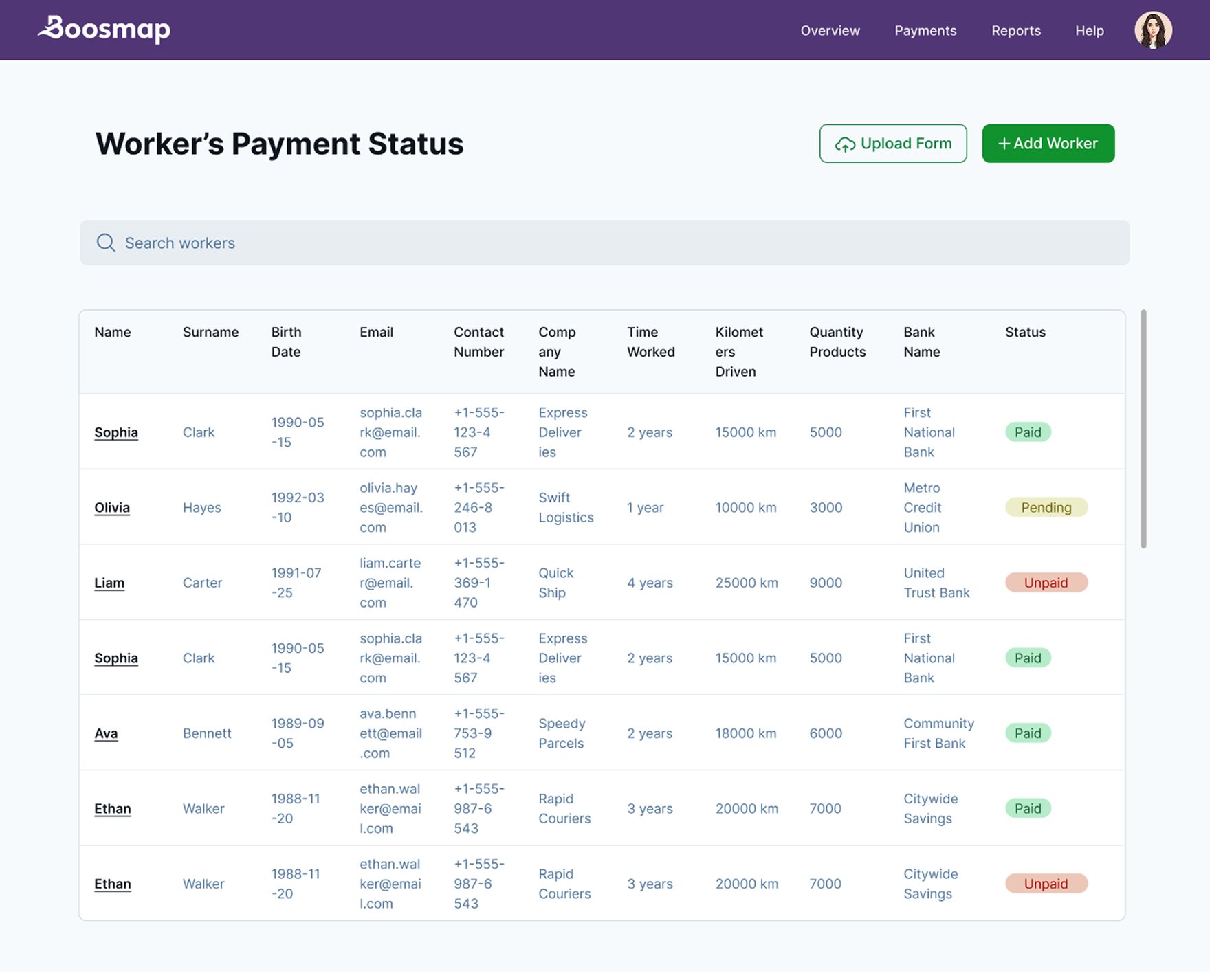
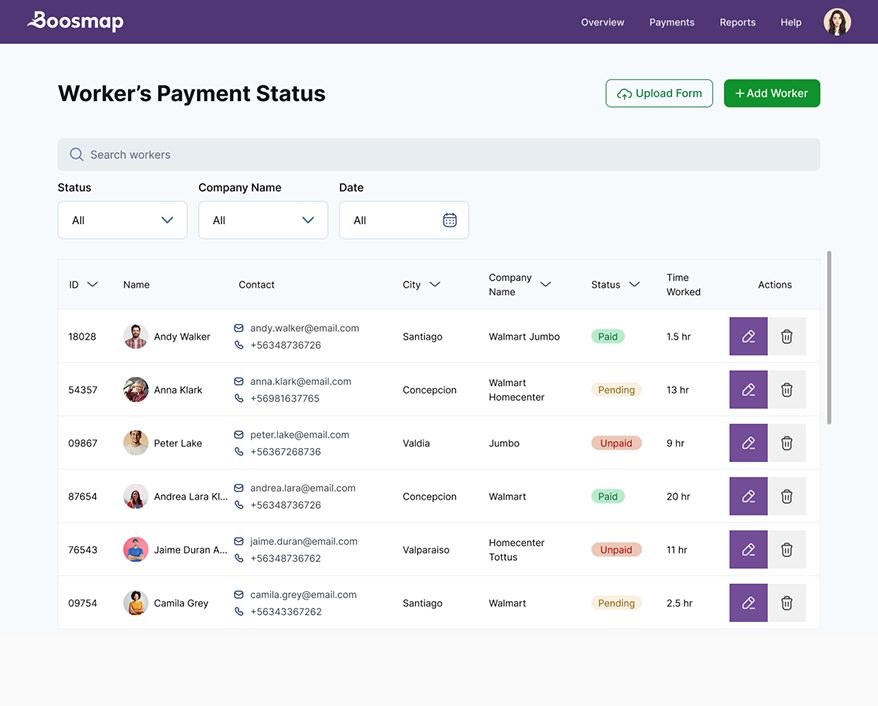 First prototypeAfter testing
Worker payments: from the first prototype to the tested version.
Four products, one designer
- Booster app: a complete redesign of the driver app.
- Worker platform: where operators manage drivers.
- Finance tool: payroll for thousands of drivers. This case.
- Tracking page: 100% my design, still live.
Every client, a different formula
The finance team paid drivers from Excel. Each client paid by different rules: hours worked, items delivered, kilometres travelled. Data lived in emails and spreadsheets, formulas changed per client, and every month meant hours of manual cross-checking.
I sat next to them
- Expert interviews with the finance team to learn every payment variable.
- Shadowing sessions of 30 to 45 minutes, watching the real workflow from opening Excel to closing payments.
- Card sorting to organise payment rules and decide what the MVP needed.
How might we design a payroll tool that adapts to every client's rules, reduces errors, and is faster than the Excel workflow?
How might we
Before: the Excel workflow
- Search emails and client sheetsScattered data
- Type everything into ExcelTedious, typos
- Apply a formula per driverDifferent rules, mistakes
- Recalculate and cross-checkSlow, low trust
- Save and share the fileVersion chaos
Manual, error-prone and draining.
After: the finance tool
- Pick driver and clientFrom a dropdown
- Fill only relevant fieldsFewer steps
- Calculations run automaticallyRules applied the same way
- Review a summaryClear structure
- Confirm and saveStored and reusable
A stepper that automates rules and builds trust.
Thinking aloud, then iterate
I tested the first prototype with the finance team using thinking aloud: find a paid worker, filter by status, add a company that pays per kilometre. Four problems showed up.
Too much information
ProblemIt took users a while to find what they needed.
ChangeShow only the most relevant columns.
Hidden actions
ProblemEditing or deleting a worker caused hesitation.
ChangeMake actions visible buttons on each row.
No filters
ProblemUsers needed groups, not keyword search.
ChangeFilters by status, company and date.
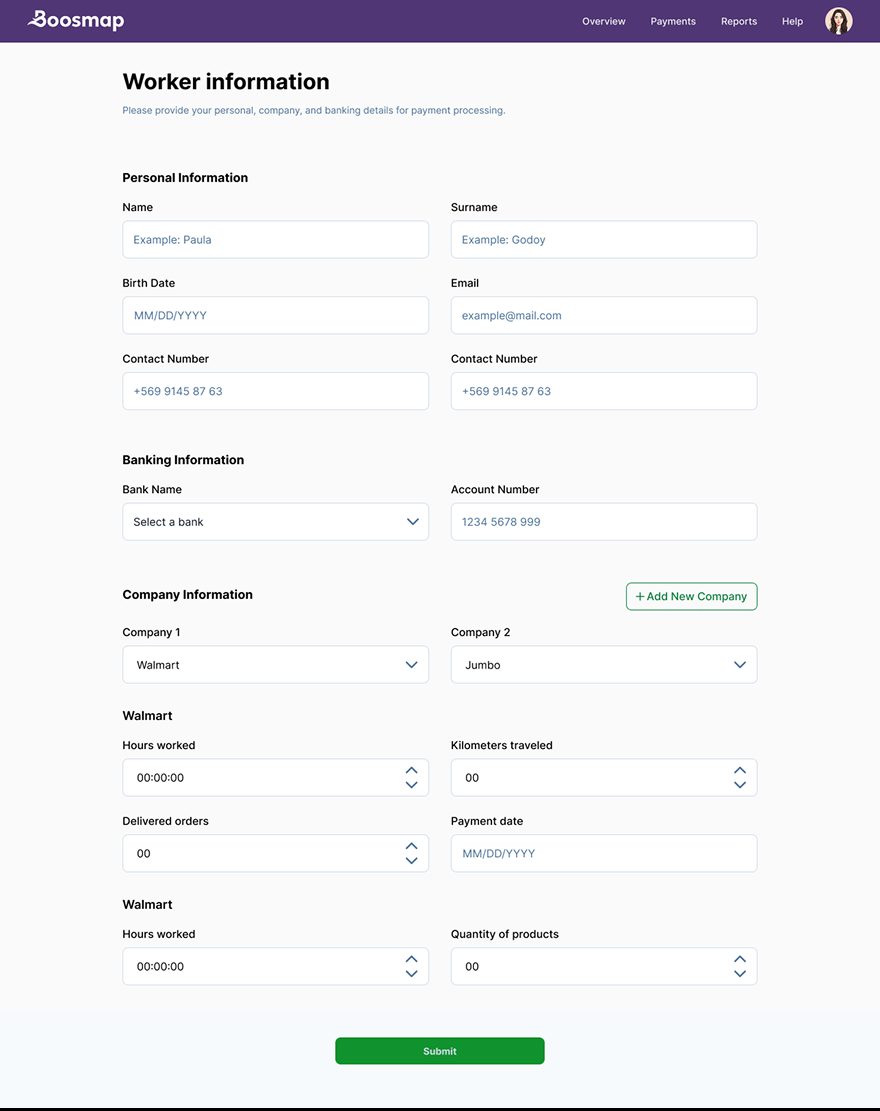
Too many inputs
ProblemOne long form slowed people down.
ChangeSplit the form into tabs.
Before
After
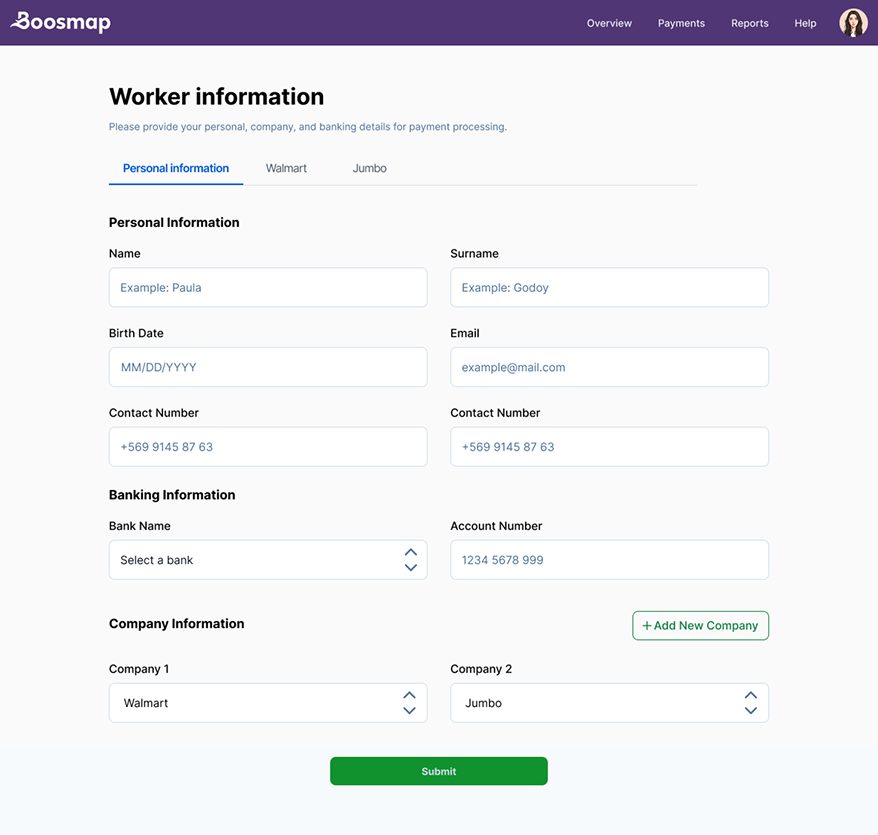
Worker information: one long form, split into tabs.
Faster, and trusted
The MVP shipped just after the one-month target, built side by side with front and back end developers.